NAME OF CLIENT: IWM/LGED
STUDY AREA: 33 Upazilas
Bangladesh’s rural road network is often disrupted by rivers, canals, floodplains, and haor areas, limiting year-round connectivity and access to essential services. To address these challenges, LGED has undertaken a bridge improvement initiative covering 40 bridges across 4 divisions, 19 districts, and 33 upazilas to enhance all-season connectivity and support local socio-economic development.
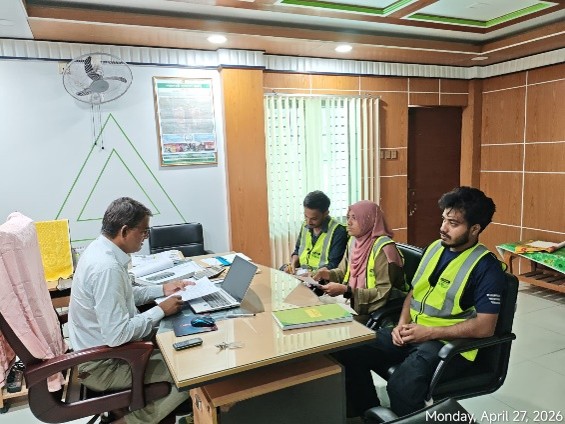
To support the planning and implementation of the bridge improvement program, the Institute of Water Modelling (IWM) was engaged to undertake the required environmental assessment studies. As part of the consulting team, ESOLVE International contributed to the Initial Environmental Examination (IEE) and Environmental Impact Assessment (EIA) process for the proposed bridge subprojects, ensuring compliance with the Environmental Conservation Rules (ECR) 2023 and applicable environmental safeguard requirements.The scope of the study included:
• Review of project documents, available baseline information, and site-specific environmental and social screening for each bridge location.
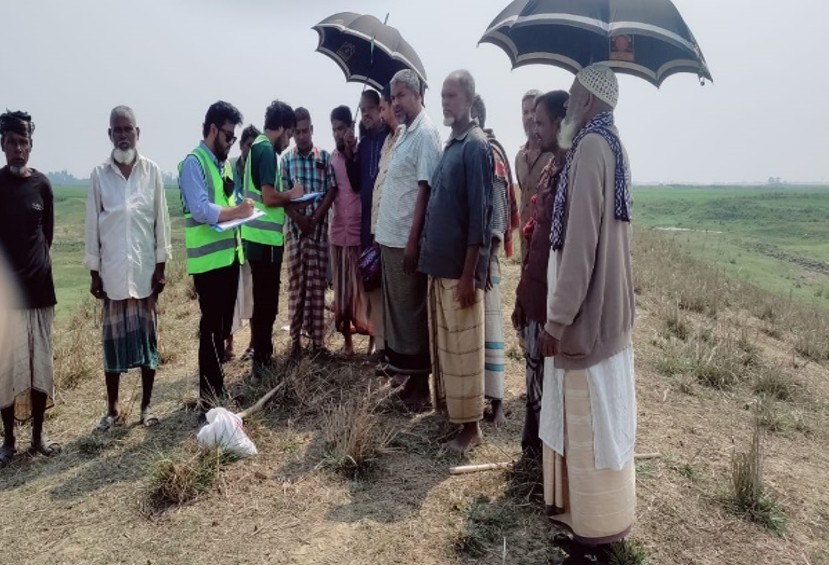
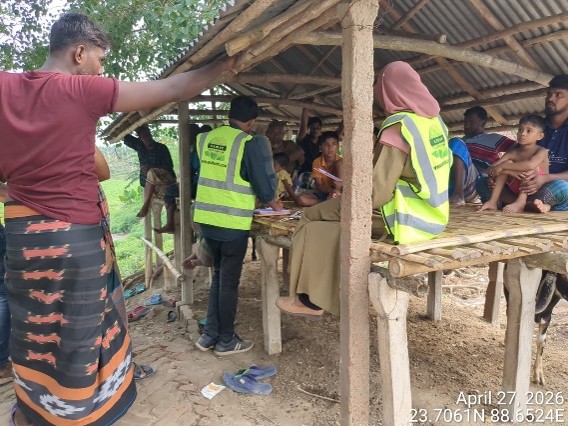
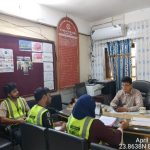
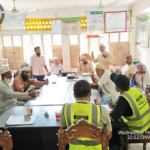
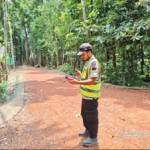
• Field investigations and stakeholder consultations to assess river conditions, ecological characteristics, land use patterns, and community settings surrounding the proposed bridge sites.
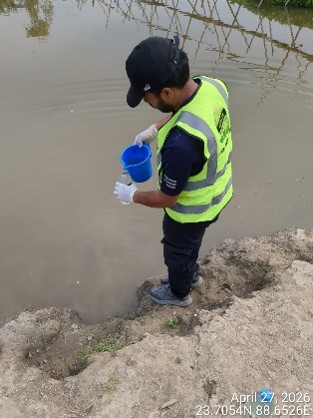
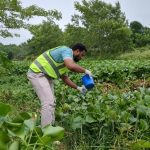
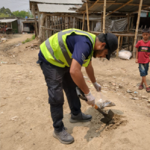
• Environmental quality monitoring, including sampling and analysis of air, noise, water, and soil parameters at representative locations.
• Coordination of laboratory testing through relevant government and accredited laboratories for water and soil quality assessment.
• Identification and evaluation of potential environmental and social impacts associated with the proposed bridge developments.
• Preparation of mitigation measures and development of Environmental Management Plans (EMP) to address identified risks during construction and operation phases.
The team prepared site-specific IEE/EIA reports and Environmental Management Plans to support environmentally sound implementation of the bridge improvement program while enhancing all-season connectivity and promoting socio-economic development in the project areas.
NAME OF CLIENT: Zhongnan-Sinohydro JV
STUDY AREA: Chattogram, Bangladesh
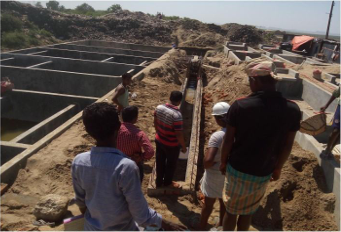
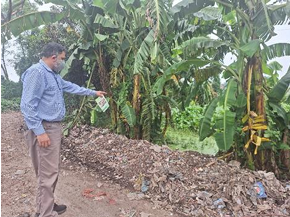
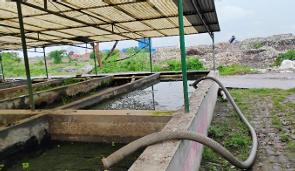
A citywide assessment of faecal sludge management (FSM) was conducted within the administrative boundary of Chattogram City Corporation, complemented by extensive field surveys in existing slum areas to support the provision of sanitation facilities, along with site-specific detailed design services under the project Faecal Sludge Management and Onsite Sanitation Improvements for PESSCM-1/W2, implemented for PowerChina. The consultancy assessed the entire FSM service area, estimating faecal sludge generation and capacity requirements. A comprehensive guideline was designed for the collection and transportation of sludge to treatment plants, supported by financial analysis and development of a sustainable business model for CWASA operations. Additionally, field surveys across slum areas in all 41 wards enabled assessment of existing sanitation conditions and identification of suitable intervention sites. The project facilitated the selection of locations for upgrading approximately 2,000 public/shared toilets and constructing around 1,000 new facilities, along with preparation of site-specific design solutions. Overall, the project contributed to improved FSM planning, strengthened institutional capacity, and more equitable sanitation service delivery.
• Collected and reviewed relevant documents, policies, circulars, ordinances, rules, etc. related to FSM and on-site sanitation.
• Estimated sludge volume for design year based on CWASA Sanitation Master Plan.
• Designed collection and transportation guideline for faecal sludge taking into consideration of current activities & operations of CCC and CWASA as well as future sewer connectivity across the proposed 6 STP Catchments.
• Developed a comprehensive and sustainable business model to support faecal sludge logistics and future CWASA operations across the city.
• Conducted training for CWASA officials on FSM Management and for sweepers and informal workers on basic hygiene practices.
• Conducted almost 6000 surveys in the slums located in CCC to accommodate 2000 upgrade and 1000 new sanitary toilets.
• Prepared site specification toilet designs in coordination with stakeholder and client.
Fecal Sludge and Flow of Funds
Assessment of fecal sludge management service chains and associated financial flows to evaluate operational efficiency, institutional arrangements, cost recovery, and long-term sustainability of sanitation services.
The Six Catchments & the Planned Location of STP
NAME OF CLIENT: SOCIAL DEVELOPMENT FOUNDATION (SDF)
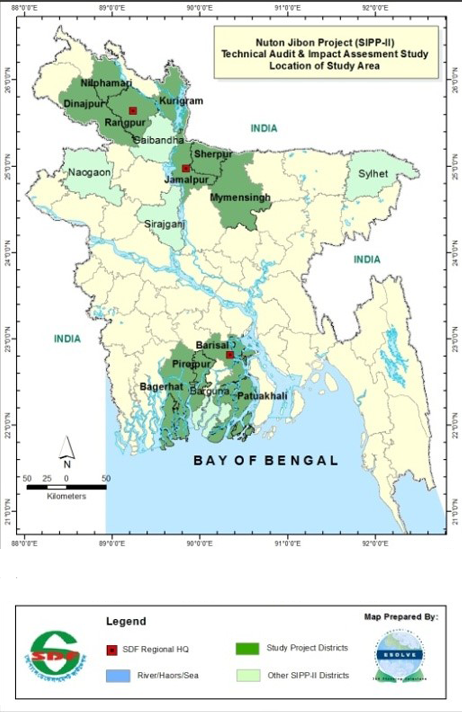
STUDY AREA: JAMALPUR, SHERPUR, MYMENSINGH, RANGPUR, DINAJPUR, NILPHAMARI, KURIGRAM, BAGERHAT, PIROJPUR, BARISAL AND PATUAKHALI DISTRICTS.
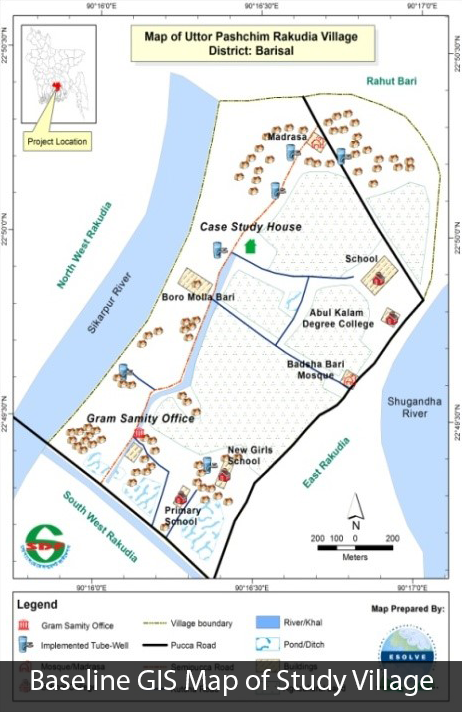
The technical audit was conducted based on surveys and visual inspections of each infrastructure, review of relevant Social Development Foundation (SDF) and Gram Samity (GS) documents and consultation with relevant SDF staff and GS NotunJibon members. Customized forms were used for the technical audit and environmental impact assessments. 51 nos. villages were selected by stratified randomized sampling for technical audit and impact assessment. In total 310 nos. infrastructures were identified for audit and assessment in the selected villages. These included: Gram Samiti Offices, earthen roads, culverts, tube-wells, palasiding, bridges, school ground raising, surface drains and pit latrines. The social and economic impact assessments were conducted through FGDs and KIIs. ESOLVE International Services were included the following tasks: Selection of villages to be surveyed, Preparation of survey instruments: questionnaires, audit forms, etc., Conduct KII and consultations with the GS sub-committees, Conduct Focus group discussion (FGDs) with the GS Members, Technical Review of infrastructure in selected villages constructed under SIPP-II, Assess environmental safeguards considered in the projects, Assess compliance with SDF guidelines and policies, Analyses of 3 case studies, Development of village maps using Geographic Information System (GIS) platform; Economic analysis to measure success of the projects.

NAME OF CLIENT: BANGLADESH ENVIRONMENTAL LAWYERS’ ASSOCIATION (BELA)
STUDY AREA: RANGPUR, LALMONIRHAT AND KURIGRAM DISTRICTS
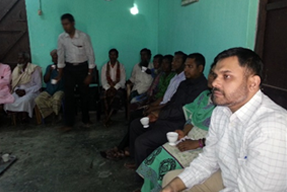
The study looked at the perceptions of poverty stricken groups and individuals living in char areas or adjacent to the Teesta River, particularly in Rangpur, Lalmonirhat and Kurigram Districts of Rajshahi divisionspecially hard core poor part of the population. These areas are mostly poverty driven and lack of proper infrastructure for a better communication makes them dependent on Teesta River for commuting and other purposes. Teesta plays a major role in the lives of the local people. Several Participatory Workshops and KIIs were conducted to determine: the perception of environmental flow requirements held by different char/river bank dwellers: farmers, fishers, cultural/religious groups, etc.;2) socio-economic conditions of the communities living in and around chars of the Teesta River3) the key components of environmental flows as understood by stakeholders; 4)the key differences of views on environmental flows amongst different stakeholders; and5)other issues considered to be important by the stakeholders.The participants identified a wide variety of in-situ and ex-situ uses of the river resources (ecosystem services). In-situ uses include bathing; washing; transportation; fishing; spiritual treatments and duck rearing. Ex-situ uses include irrigation; sourcing of nutrition for people (fish and edible plants) and livestock; collecting of plants, sand and woody materials for own use and to sell in local markets; and spiritual treatments (where water is taken from the river for religious purposes in other locations).
In summary ESOLVE International provided the following services:Design survey strategy and workshop structure; Prepare questionnaire; Prepare sample size of Household Survey and the survey methodology, Conduct Participatory Rapid Appraisals, Identify different stakeholders of the study areas and meeting with different stakeholders;Facilitate participatory workshops; Conduct KIIs; Analyze primary and secondary socio-economic data; Prepare report on survey findings etc.
The study was widely acclaimed by the client and the findings triggered several research opportunities.

NAME OF CLIENT: LOCAL GOVERNMENT ENGINEERING DEPARTMENT (SUB CONTRACT)
STUDY AREA: KAKONHAT, MUNDUMALA, TANORE POURASHAVA
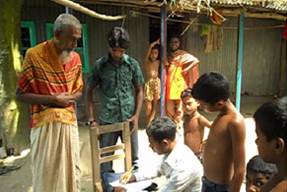
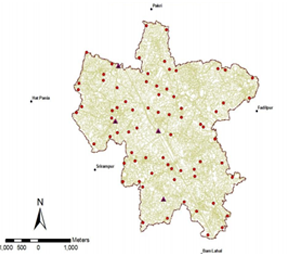
As per LGED requirement to prepare a master plan for Kakonhat, Mundumala and TanorePourashava under Rajshahiand ChapaiNawabganjDistricts, a team was engaged to identify the Socio-economic profile of these pourashavas. For this comprehensive baseline studies were conducted through a Socio-economic survey of households. As per Client requirement, five percent households have been surveyedon the basis of a pre-coded compact questionnaire provided by LGED Consultant. The Survey locations were selected as per random sampling method covering all the wards of each Pourashava. The main purpose of thissurvey is to know the socio-economic status of the people of the rural areas.
Scopes of this survey include but not limited to demographic information, income, housing status,
infrastructures and service facilities and existing problems and prospects in the study area. A
survey team had been formed to conduct the above mentioned survey works.
An arrangement had also been made to provide orientation and training to the survey team by the Survey Team Leader (A Social Development Specialist). After orientation and training, the survey team was sent to the field. Prior to conduct field survey a consultation meeting has been conducted with PourashavaMayor, Ward Commissioners’, other officials and some local people to clarify the purpose of thesurvey. Then the Pourashava authority informed local people regarding this survey and requestedthem to provide the necessary information. Thus Pourashava officials are involved in this survey. To collect secondary data the population census has been extensively reviewed. From population census information on demographic, educational, occupational, urban service facilities etc. have been collected, analyzed and compared with the field survey data. The methodology and steps of the socio economic survey can be summarized as follows: a) Preparation of Questionnaires b) Sample Selection c) Household Sample Survey d) Database Preparation and Data Processing e) Prepare final baseline report of socio economic profile of Kakonhat, Mundumala&TanorePourashava.After collecting survey data all were entered in a excel based database and further cross tabular analysis were carried out using SPSS. We derive the baseline status of household income status, education, infrastructure condition, primary development requirement, sanitation and water supply status, solid waste disposal system and disaster management skills, medical facilities, recreation facilities etc. All these parameters were well derived from the baseline socio-economic study of Kakonhat, Mundumala and Tanore Pourashava.
NAME OF CLIENT: YOUNGONE CORPORATION
STUDY AREA: SONARGAON UPAZILA, NARAYANGANJ.
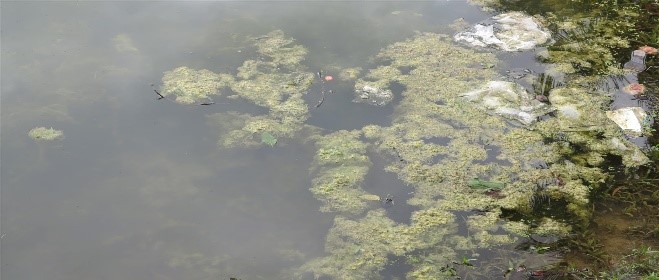
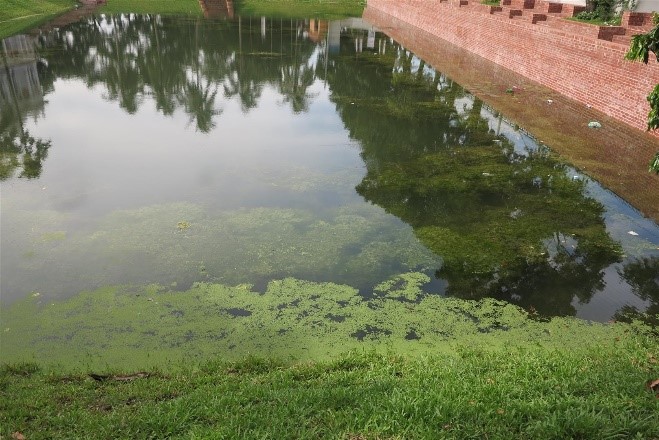
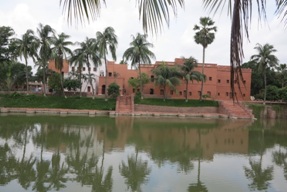
Youngone Corporation has currently restored a historical building, which is located within the Sonargaon Folk Art & Craft Museum complex (Sonargaon Upazila, Naryanganj District). The Museum complex is approximately 29km southeast of Dhaka, along the Dhaka-Chittagong Highway. It is located about 500m northeast of the highway, very close to Panam City (Nogor). Youngone engaged ESOLVE International to identify effective treatment options for the restoration of the water quality of two ponds situated in the Sonargaon Folk Art and Craft Museum complex. The water of the two ponds regularly face algal growth (giving it a green color) and turbidity, which reduces the aesthetic appeal of the place. To reduce the algal growth and turbidity, this study will do the following:
- Investigation of existing situation and history of the site
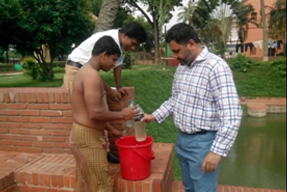
- Water sample collection and testing
- Flora and Fauna survey
- Identification of possible causes of water quality deterioration
- Formulate a number of alternative measures for short-term and long-term solutions for water quality restoration
- Prepare cost estimates and compare among the alternatives.
- Suggest suitable short-term and long-term treatment solutions
After analyses of water quality test results and investigation of the drainage system and potential pollution sources, ESOLVE team provided phase-wise technical solution to the water quality problem. The team also successfully demonstrated the application of the preferred solution on one of the ponds. This involved careful selection, preparation and application of algaecides and beneficial probiotic mixture to the pond.
Before (left photo) and After (right photo) ESOLVE Customized Treatment Solution (Drag the middle bar on the image)